


















In August, the Texas GOP signed a plan into law altering Texas’s congressional districts. In response, California Democrats created a proposition to change the state’s districts, balancing out Texas’s Republican gains. California voters will get the chance to approve or reject Proposition 50 in a special election this November.
Below is an explanation of why Texas chose to redistrict, what California is doing in response, how voters reacted, and what California voters should know about the special election.
Texas Republicans’ plan will benefit the GOP in the House of Representatives
Texas Governor Greg Abbott signed his state’s redistricting plan into law on Friday, August 29th, according to the Texas Tribune. Under the newly introduced maps, the Republicans could gain five new U.S. House districts.
Under the newly created maps, Trump would’ve gained three more congressional districts in the 2024 election than former President Joe Biden gained in 2020. Republicans also would’ve had better odds in two Democrat-held districts that Trump ended up carrying in 2024.
Formerly, 27 of Texas’s 38 districts went to Trump, encompassing 71% of the Texas population. Now, 30 districts, containing 79% of the population, would go to Trump.
According to the Tribune, Trump’s team pressured Texas lawmakers to redistrict now; usually, they would do so at the turn of the decade. Trump fears that, without these changes, the Democrats will win the House again in the 2026 midterms.
Republicans control both chambers of the Texas Legislature. This means the GOP already gets to draw congressional maps, explaining why these are in their favor. Texas Republicans hope that voters will keep skewing right, including a large base of Hispanic voters in the South.
Texas’s measure may spur other states to undertake similar plans, including Ohio, Indiana, Missouri, and Florida.
California Democrats’ redistricting plan would balance out new Republican seats; this time, Californians get to vote
In August, Democrat leaders in California completed a plan that would balance out Texas’s, CalMatters shares. Newsom and his supporters say that they’re stopping Trump and his team from rigging the 2026 midterms.
But the way California’s districts are chosen is different. In Texas, the state Legislature gets to choose the districts. Here, in 2010, Californians voted to have districts decided by an independent redistricting commission. Once a decade, this commission creates a new district map, following the census.
Newsom’s plan would temporarily let the state government make districts that are more favorable to the Democrats, so they could balance Texas’s plan. These districts would expire in 2030.
Unlike in Texas, where the legislature unilaterally decided to redistrict, Californians will get to vote on the redistricting plan, known as Proposition 50. Democrats feel confident that voters will support their proposition, but Charles Munger, a Republican donor who previously supported independent redistricting, has said he will pour money into opposing the plan, threatening Newsom.
“California’s potential redistricting plans could have ripple effects that extend well beyond the state’s borders,” Ms. Harrington, a CCHS social science teacher and CCHS’ Rho Kappa moderator, shares. California is the most populous U.S. state, so it holds the largest number of seats in the House of Representatives. As shown in the 2024 election, control of the House often depends on a small margin of seats. Ms. Harrington predicts that “if redistricting in California creates more swing districts or alters the makeup of existing ones, it could influence which party holds the majority in Congress.” California’s redistricting decisions may also serve as a model for other states and transform the national conversation around redistricting and democracy, like Texas’s did.
What voters in Texas and California think
Texas voters had mixed reactions to their state’s redistricting, a video by CBS Texas shared. Out of 1,000 voters surveyed by Emerson College, 36% supported the law; 38% were opposed.
When the surveyors asked if Trump and Republicans were entitled to more seats, 40% agreed, while 38% still objected.
The Texas Tribune reports that organizations representing Black and Latino voters have protested the Texas redistricting plans.
In California, ⅔ of voters prefer having the independent commission choose districts over having the legislature choose. Newsom says that his plan would make legislature control temporary, responding to what he says is an emergency. When framed along these lines, support for the redistricting measure is at 52% among California voters.
Important dates for California voters
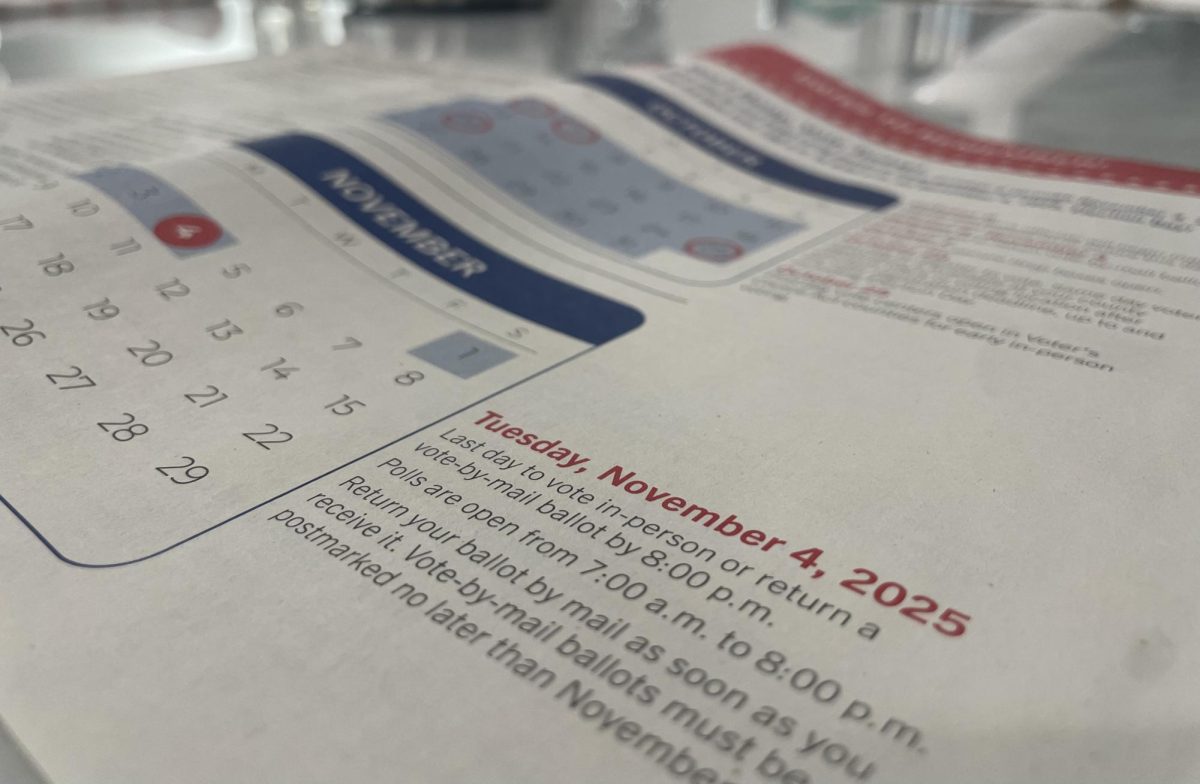
The future of California’s redistricting plans will fall into the hands of California voters next week.
On Monday, October 6th, county elections offices will begin mailing ballots to voters.
Voters can return vote-by-mail ballots at drop-off locations, by mail, or at a county elections office. The ballot drop-off locations will open on Tuesday, October 7th.
The last day to register to vote in the special election is Monday, October 20th.
Californians can register to vote online here.
Vote centers will open on Saturday, October 25th, in San Diego County and other Voters’ Choice Act counties.
The special election will take place on Monday, November 4th. If you plan to vote by mail, your ballot must be postmarked by then.
Vote-by-mail ballots must be received by Wednesday, November 12th.
Detailed information about the special election is available on the California Secretary of State website.
What you should know about voting
Ms. Harrington encourages eligible students to participate as voters in this special election and in general, to shape our generation’s future. “Elections decide everything from local funding and community programs to state laws and national policies,” she shares. “Young people are often underrepresented at the ballot box, yet the issues debated today—like education, climate policy, job opportunities, and healthcare—directly affect your generation the most. By registering and showing up to vote, you help make sure those in power pay attention to your priorities.” When young voters come together and participate in elections, they can show the world what the next generation hopes for.
But students who aren’t eligible yet can still find value in following this special election. “Even if many high school students aren’t old enough to vote yet, understanding how elections and ballot measures work helps prepare them to be informed voters in the near future,” Ms. Harrington explains. “By learning about issues like redistricting and ballot measures, students can see how local choices influence national politics and why civic engagement matters. Paying attention now helps build habits of participation that will empower young people to make a difference when it’s their turn to cast a ballot.”