







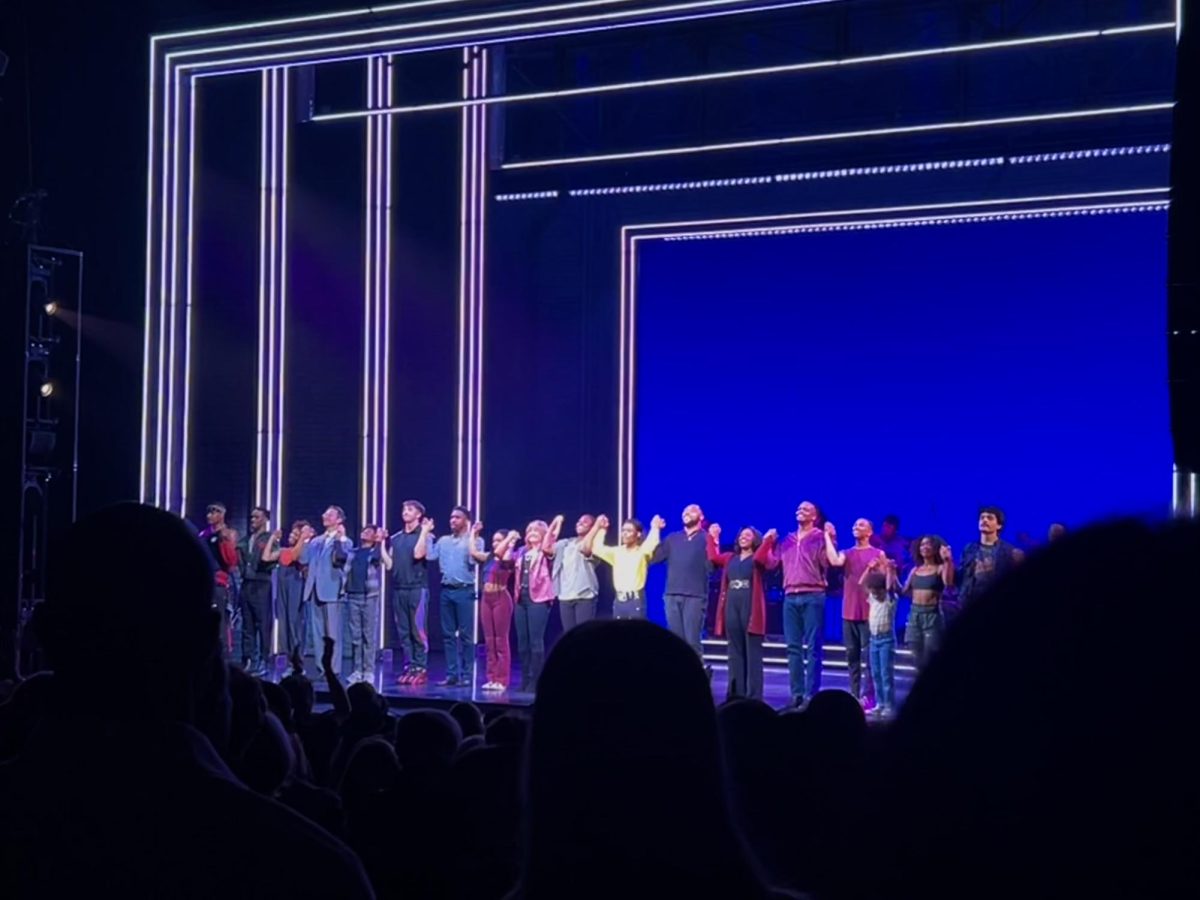









I am sure many students can remember a time a parent once said, “I remember the good old days when concert tickets were 10 bucks or you were lucky enough to smooth-talk a security guard to let you in for free!” Today, buying concert tickets feels less like a chance at a fun night out and more like applying for college loans. As prices rise and young adults must drop hundreds of dollars just for one night of fun, our parents’ stories of unplanned fun are becoming more romanticized yet unrealistic by the day.
Just this past month, British superstar Harry Styles, formally a member of the hit boy-band One Direction, announced his return to music with the release of hit song “Aperature,” and subsequently announced an epic 2026 tour spanning 50 shows this summer.
After tickets were announced, fans were quick to express their outrage at the cost of tickets. Prices in the U.K started at 44.10 pounds, or $60.80, to a whopping 466.24 pounds, or $642.76 according to the Hollywood Reporter. Similarly, prices in the U.S were priced anywhere from $50 to $1,182.40!
Harry Styles is not the only artist who has been met with backlash at their outrageous concert ticket prices, A-list musicians like Morgan Wallan, Billie Eilish and Sabrina Carpenter have also been attacked by fans.
Many individuals’ first instinct is to blame the artist for their raised concert prices, but is it actually their fault? The answer is: it’s complicated.
In general, it is common for artists to set a budget for revenue which is based on how complex a show it is to produce and how many workers they need to pay. According to Michael Kaminsky, the founder of music management company KMGMT, “In the U.S., artists usually turn to promoters, who get a cut of the ticket sales to market the show and hit those revenue targets.” Because there are so many moving parts within a tour or live performance, there is no straight answer as to who determines the price of concert tickets.
In recent years, one major perpetrator of the rising concert prices has been discovered: Ticketmaster. Last September, The Federal Trade Commission filed a lawsuit against Ticketmaster, accusing the company of misleading consumers about ticket prices and cooperating with “scalper” to drive up resale prices. Scalpers is a term used to describe automated bot that use multiple accounts to hoard tickets and resell them at massive markups.
Similar accusations have been made alleging that Ticketmaster has been eliminating competition and making it harder for fans to have options when it comes to ticket pricing, according to NPR.
Lola Wesling, a senior at Cathedral Catholic, recounts the time she tried to purchase tickets to Ariana Grande’s concert on Ticketmaster this past year. “On the day of presale, I made my brother stay home with me to monitor one account while I did my own account because I knew that trying to log in on two devices with the same account would kick me out and I was also worried about us being on the same IP address.” She continued by explaining, “When we entered the queue, both my brother and I were like #70,000 in line and then both events sold out after like 3 hours and we were only like #60,000 by then but then my mom bought resale tickets for like quadruple the price.” This may seem like a ridiculous story, but it’s unfortunately the average Ticketmaster experience that every person suffers through at least once in their life for the concert of their dreams.
One major factor in the reason why artists have raised their prices is because of the changing music revenue industry. Prior to major streaming platforms like Spotify, artists would receive a good chunk of their income from record sales. But, because record sales have all but become prehistoric and music streaming services pay artists a fraction of a penny for each stream of a song, artists have to make up for lost revenue in other ways, which means raising their prices for the concert performances.
I think this issue is not just about the cost of concert tickets, but it’s the larger loss to a community of music-loving individuals who are unable to enjoy live music simply because they cannot afford it. Live music is such a crucial part of American culture. It brings people together, builds national pride, and supports countless state economies who benefit from the jobs provided by concerts. When concerts become a luxury, they shift the meaning of live music away from connection and more towards a chance to show off wealth or status.
Similarly, teens, especially now, need as many excuses as they can get to get out of the house and make memories with friends and family. It is not hard to see the growing trend of young adults who are becoming more secluded, isolated, and lonely. When concerts become an extravagance that the average teen cannot afford, the risk of the new generation becoming even more isolated from the world grows exponentially.

Ellis Ehrlich • Mar 6, 2026 at 12:02 PM
Pearl, I love how you covered this topic. I feel that this is important and relevant to our current era, and thank you for discussing such a present topic.
Dparker2029 • Mar 6, 2026 at 12:01 PM
This is a very interesting topic and I really enjoyed this! As someone who goes to a lot of concerts I have noticed this and agree with what you have to say.
nhampton2029 • Mar 6, 2026 at 11:59 AM
This was a very interesting article because you highlighted how outrageous it is to get concert tickets.
Summer Grant • Mar 4, 2026 at 10:44 AM
Pearl, I loved how you tied in the importance of live music and community spaces. Good job mentioning specific artists that readers might think of, but highlighting that it’s not all on them — there are many moving parts. This article was written in a very thoughtful and engaging way, I loved reading it!
Elise Frias • Mar 4, 2026 at 10:43 AM
This is a really great article and on a really interesting topic! I love how you addressed the nuances and the fact that ticket prices are not solely the fault of the artist.